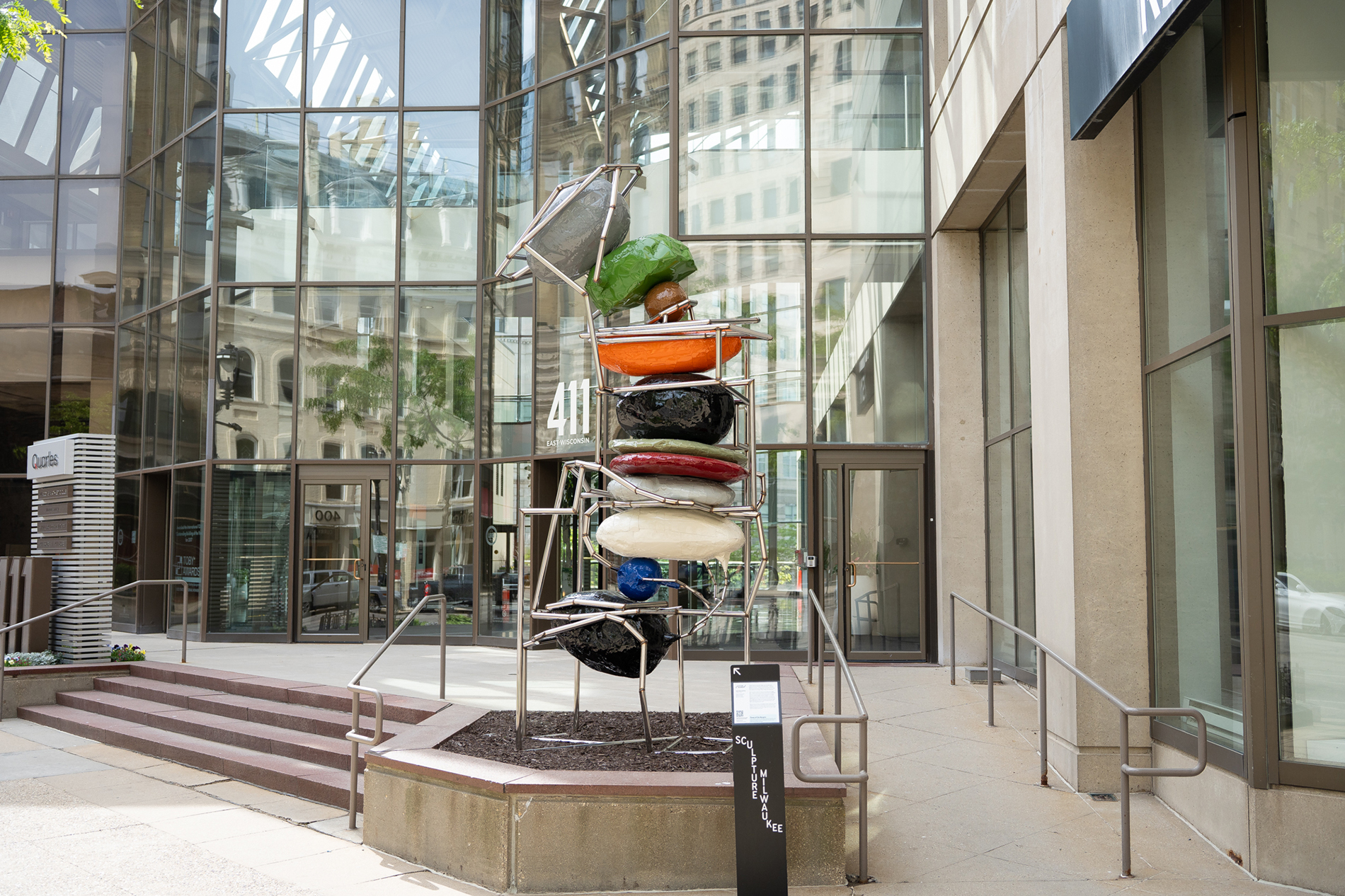
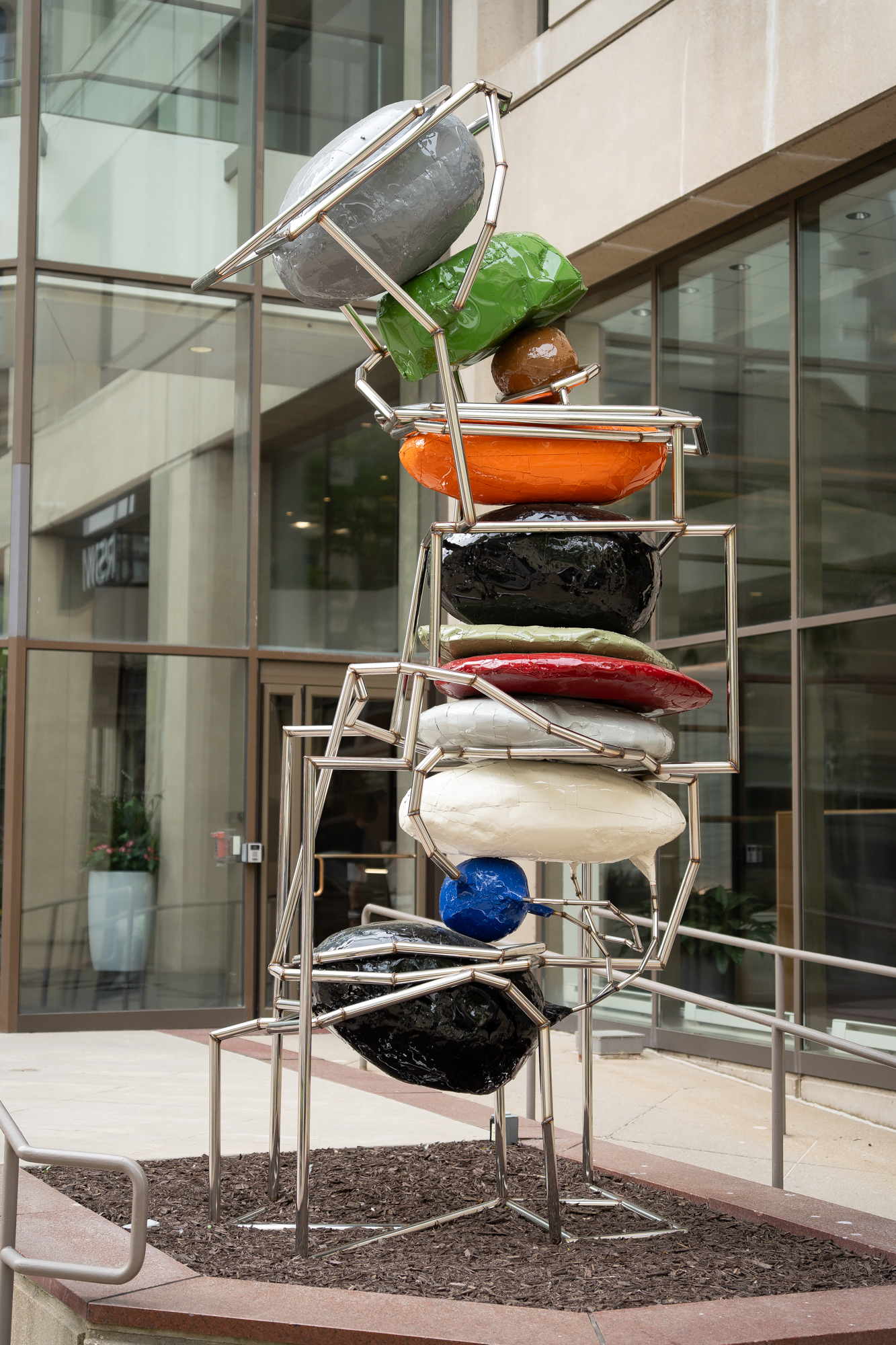


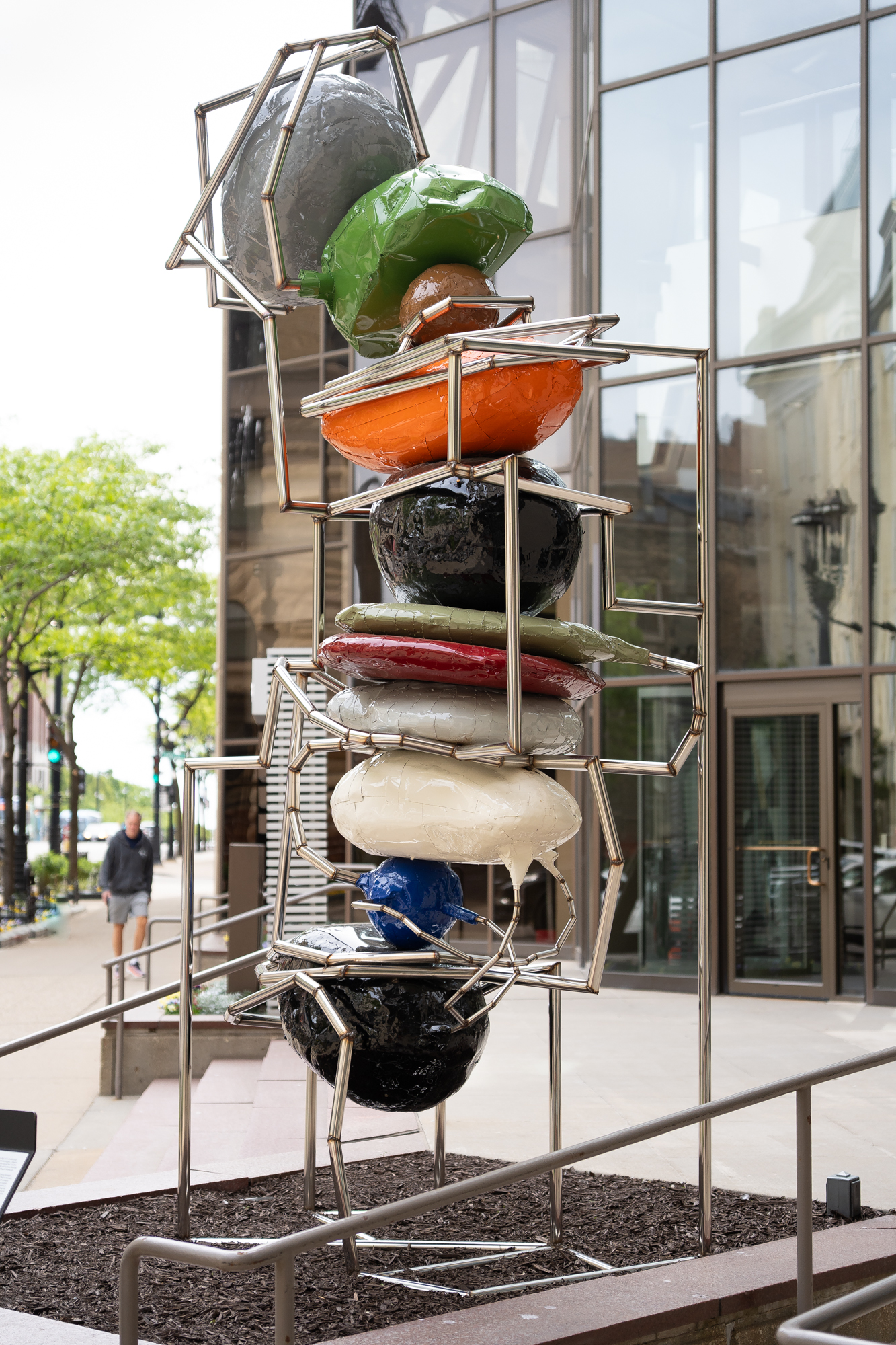
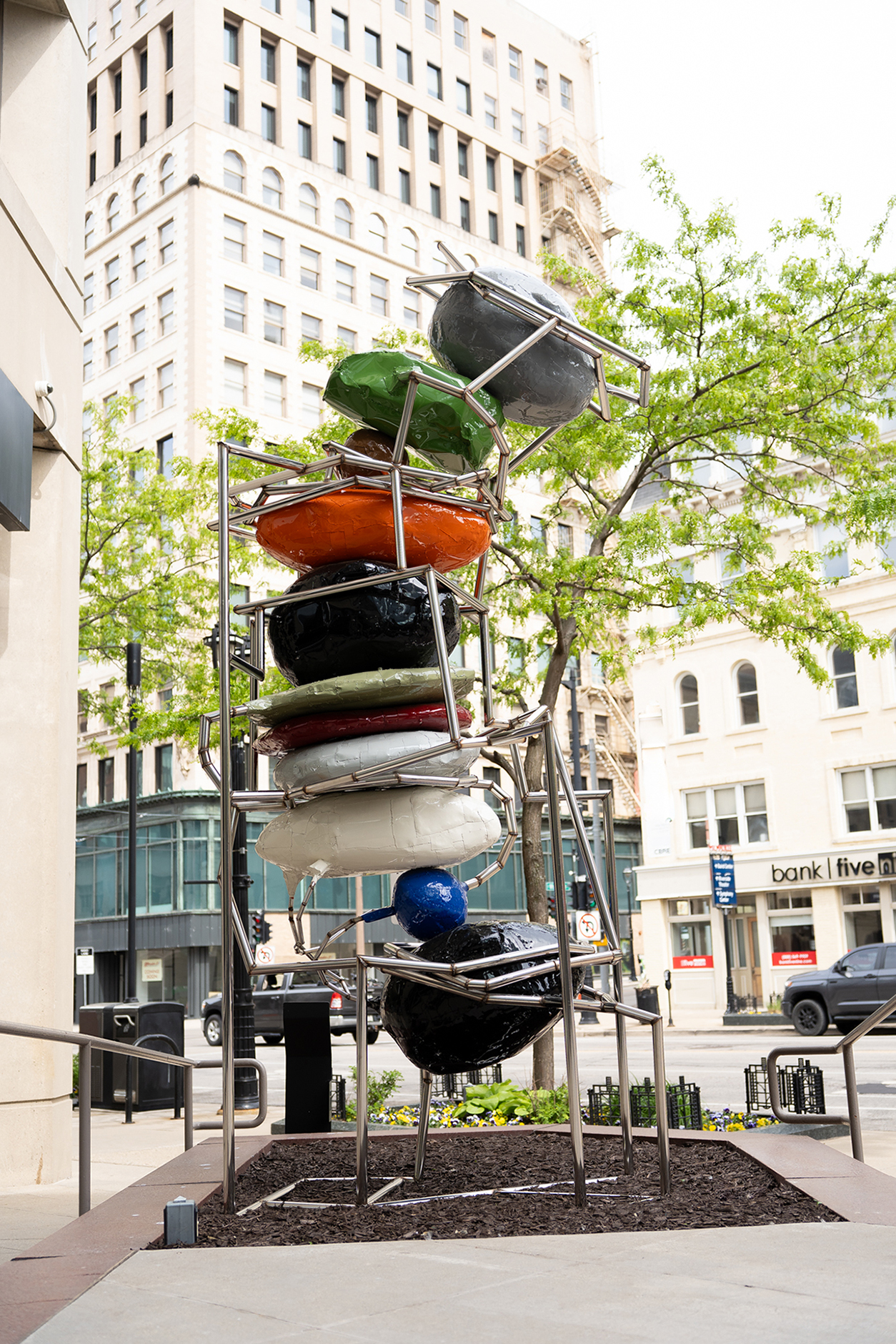
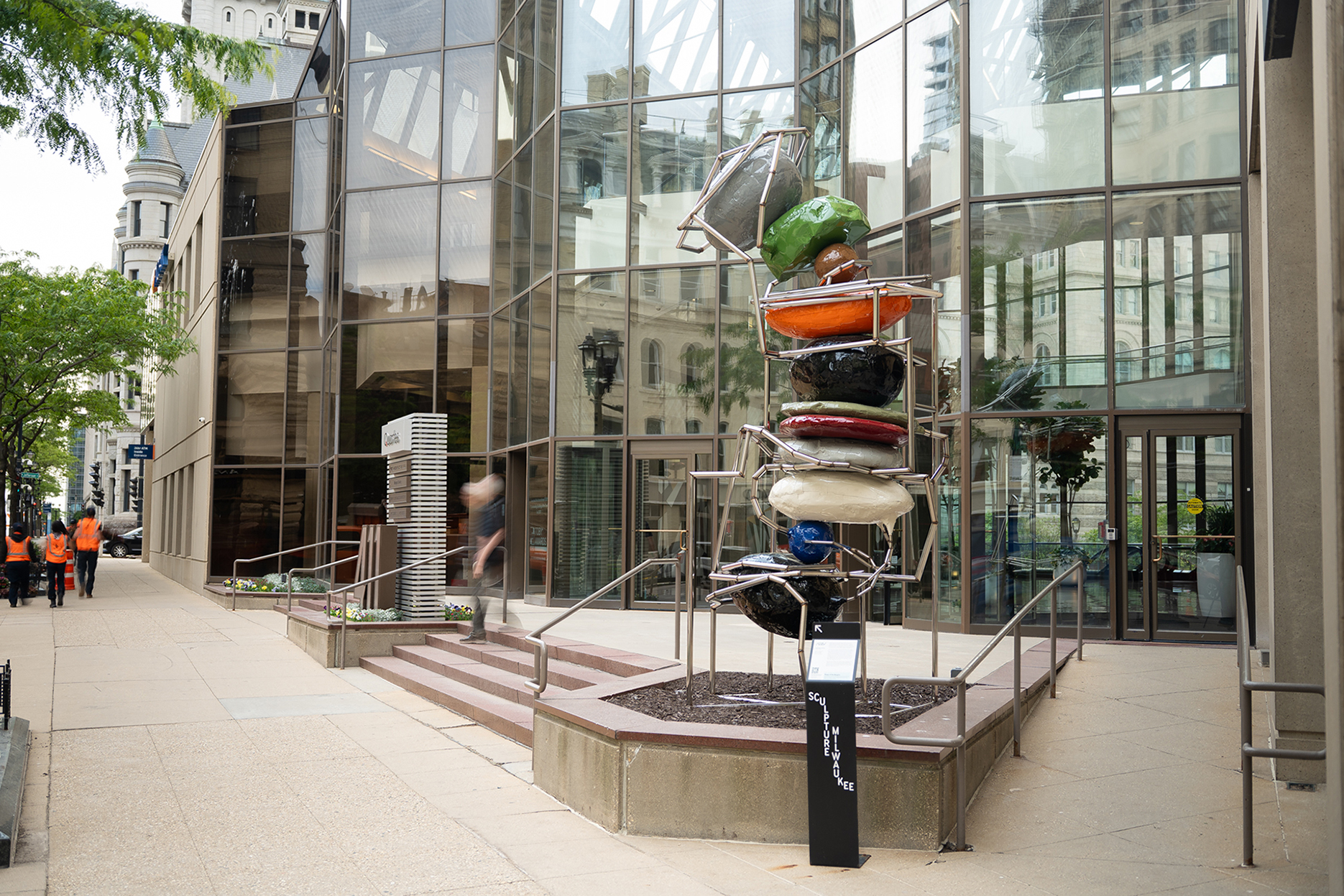
Conceived for Sculpture Milwaukee and installed in public space, Gaze Grows Bones unfolds as a sustained field of tension between perception and structure, where the seeming infinity of the eye is set against the rigid, enclosing logic of a spine. A quiet but persistent friction runs throughout the work, emerging between individual sight and collective vision, and between the fluidity of perception and its gradual hardening into something fixed, constrained, and at times almost immobilized.
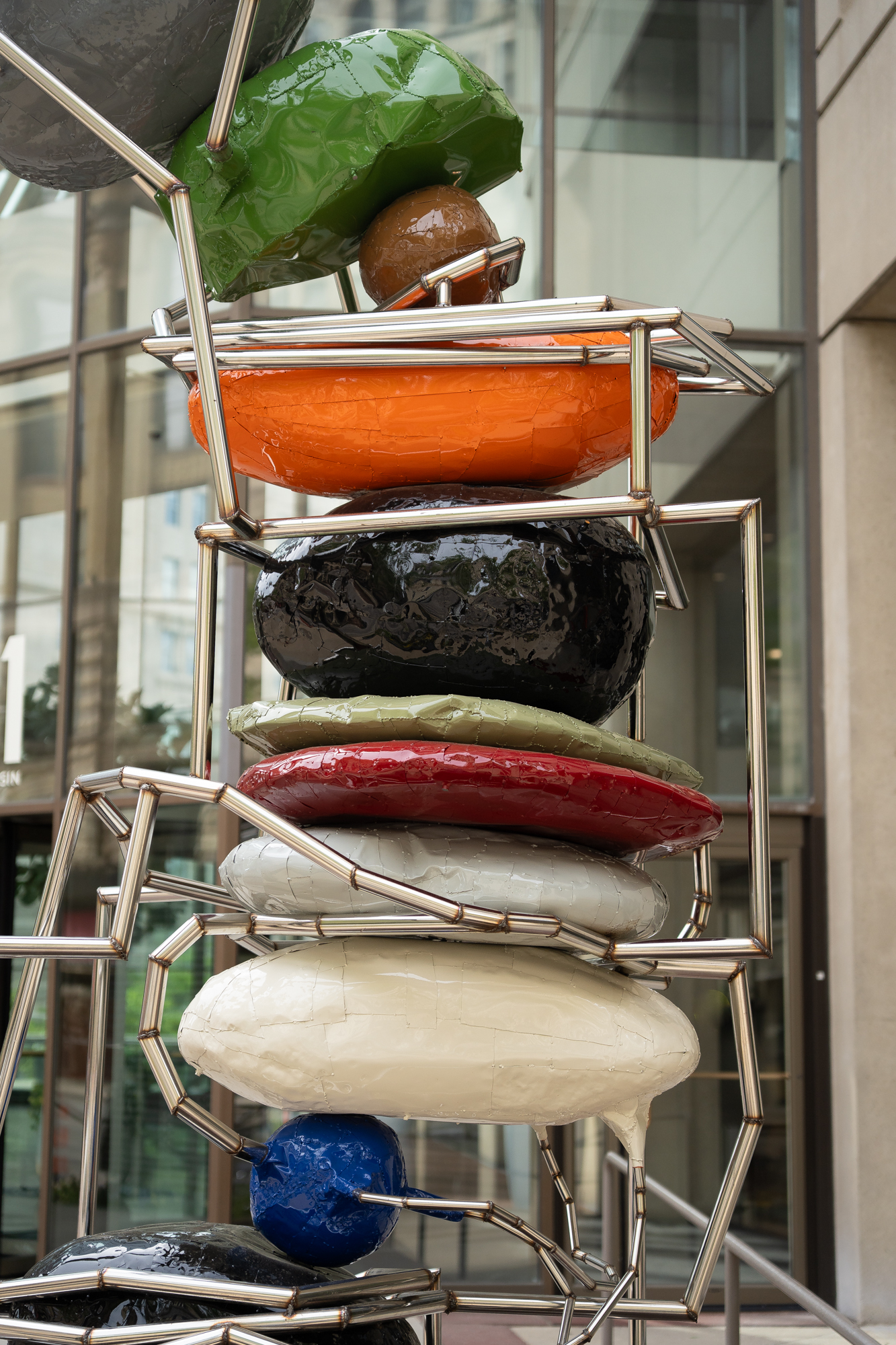
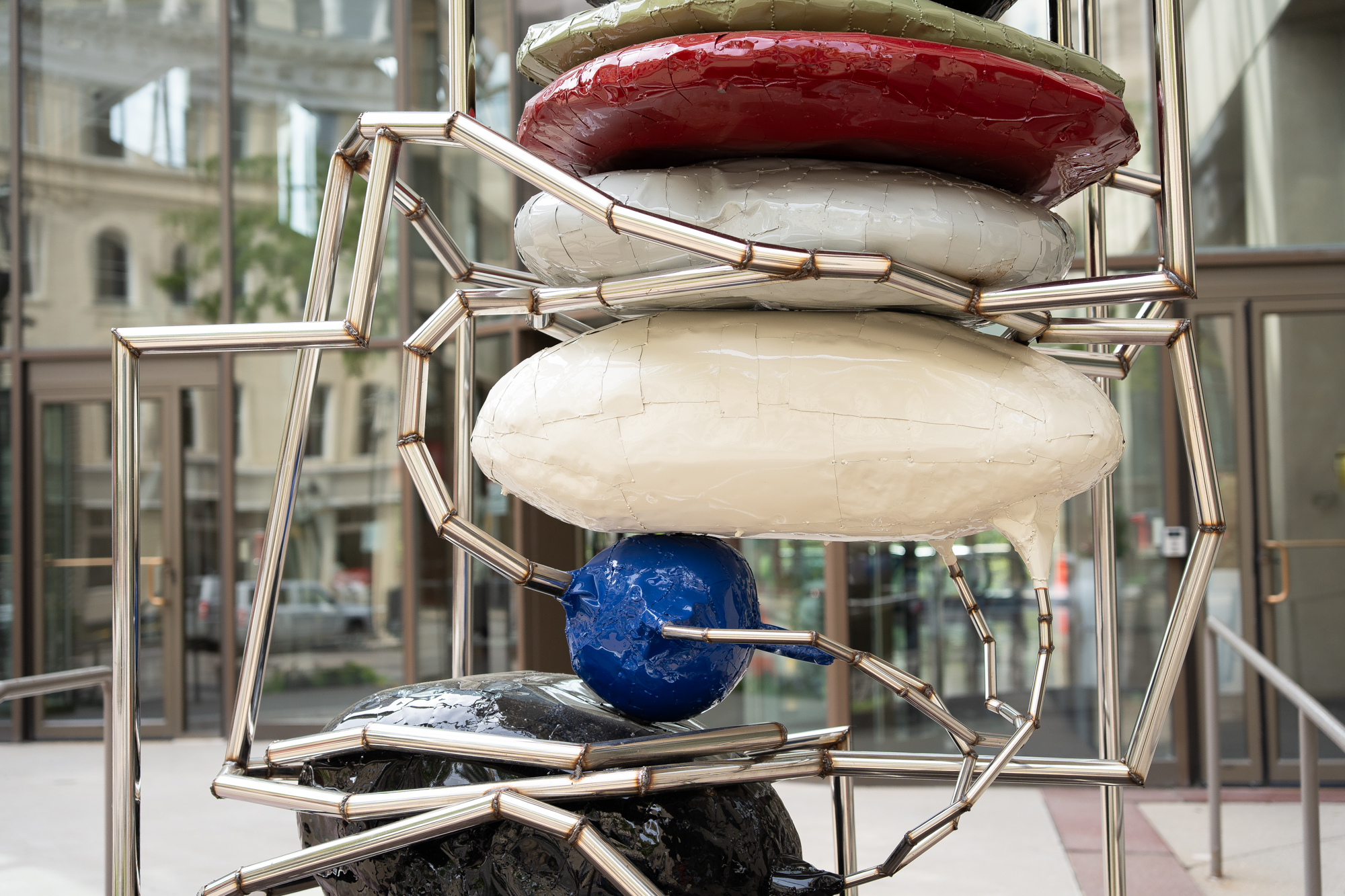
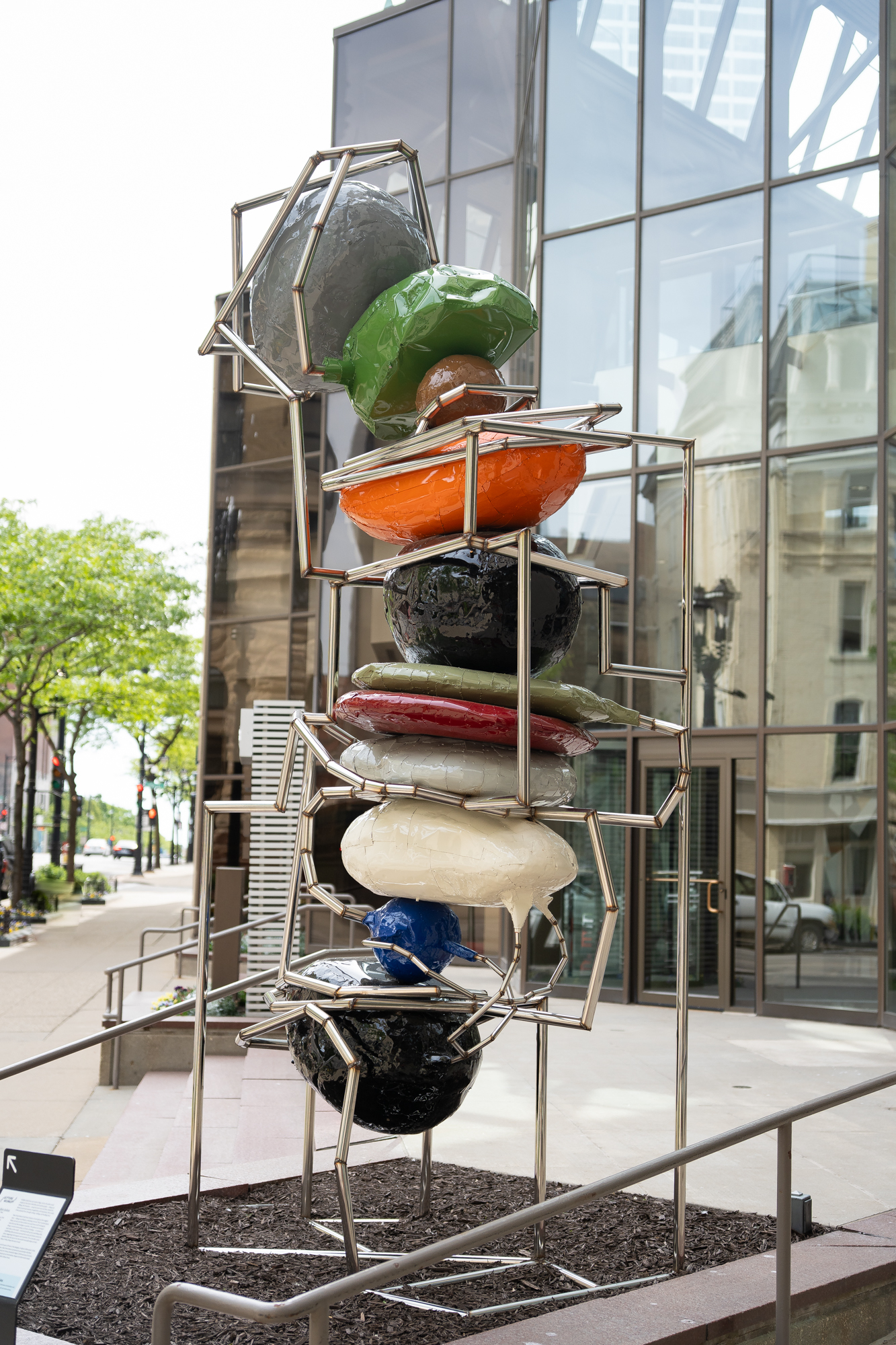
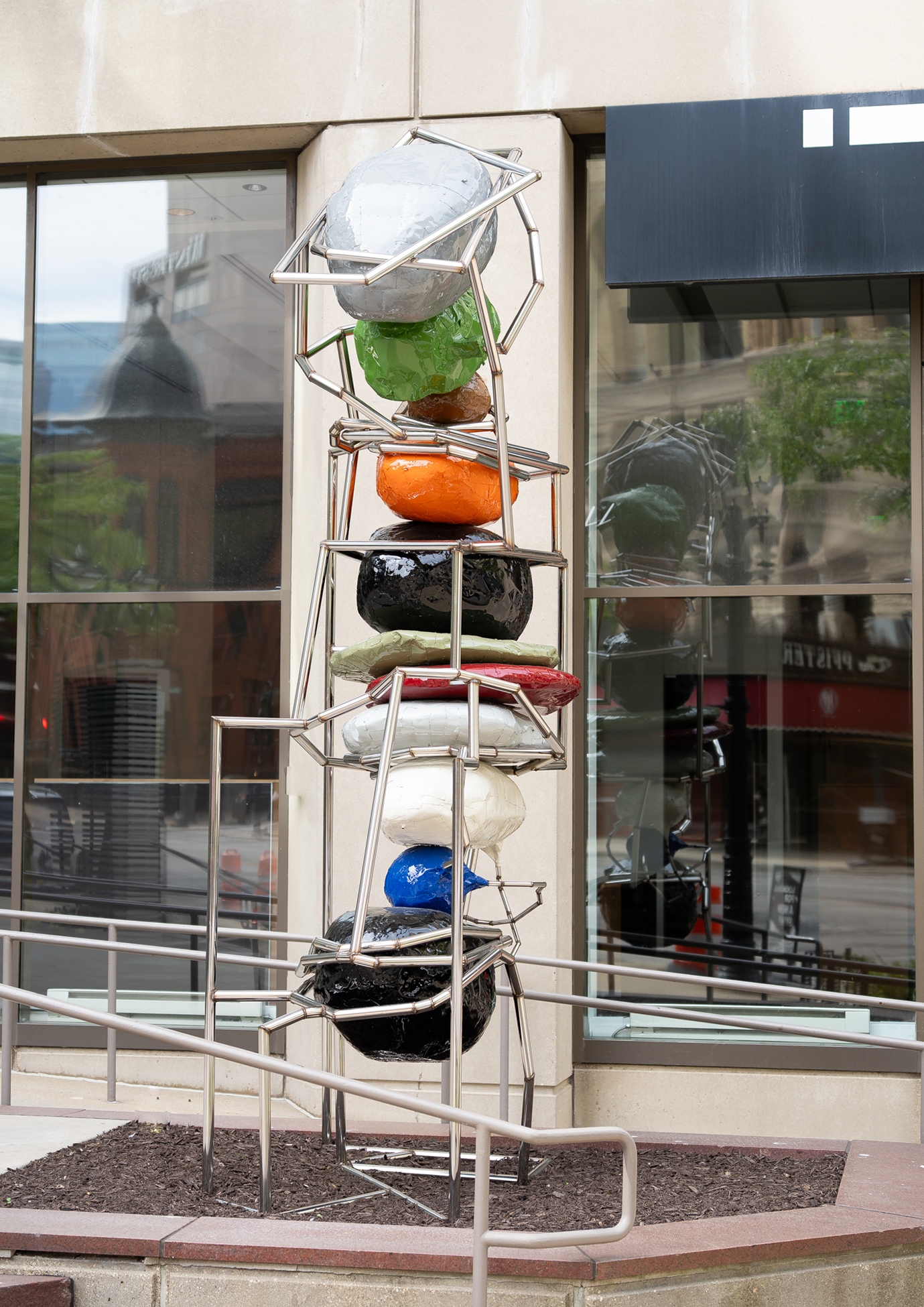
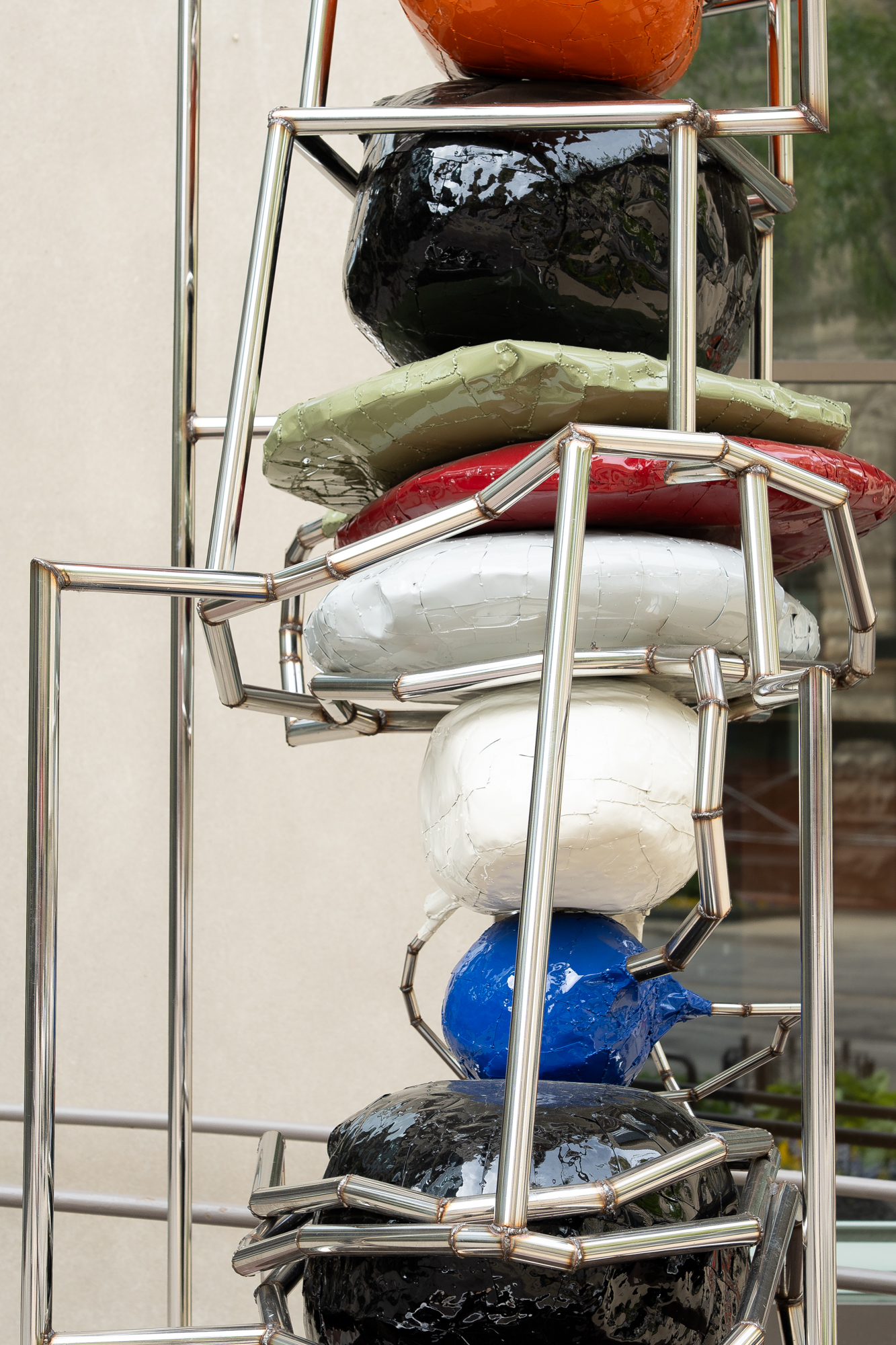
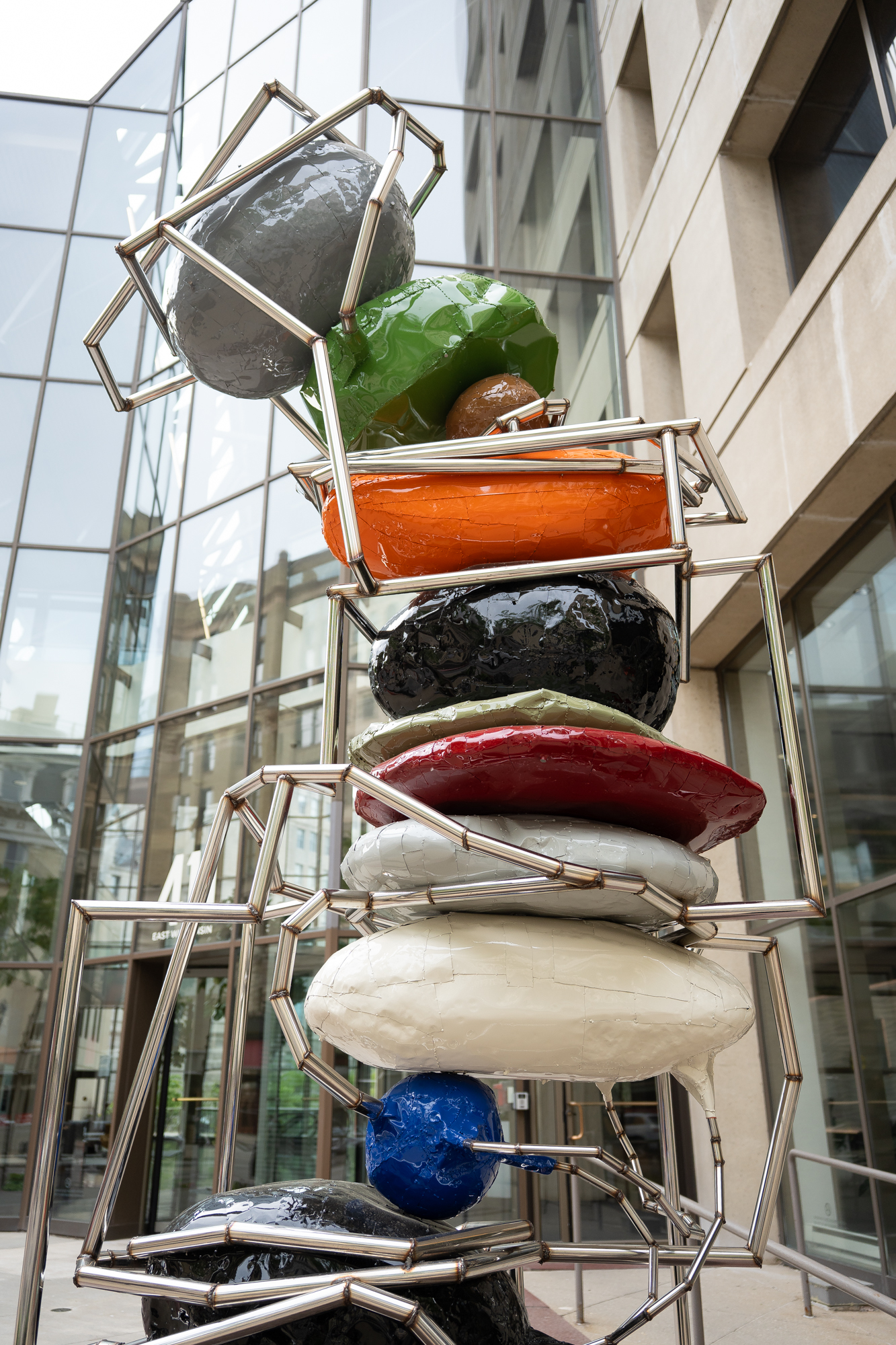
The sculpture is composed of interconnected spherical forms that evoke eyes without edges, at once absorbing and projecting their surroundings. Each sphere is differentiated through color, with pale grey marking blind zones, black condensing the density of the pupil, and red vibrating with heightened sensory intensity. Constructed from small rectangular units that resemble bandages, patches, or fragments of coded information, their surfaces suggest both a state of repair and a condition of mediation, where experience is continuously filtered and reassembled.
These spherical elements gather along a bent, vertical axis, forming a structure that recalls a spine, a site where perception accumulates, thickens, and begins to ossify. Subjected to an implied but tangible pressure, the forms appear slightly compressed and flattened, as though shaped by forces that are ambient yet inescapable. Within this configuration, vision no longer operates as a neutral or passive act, but becomes something materially conditioned, spatially embedded, and collectively produced.
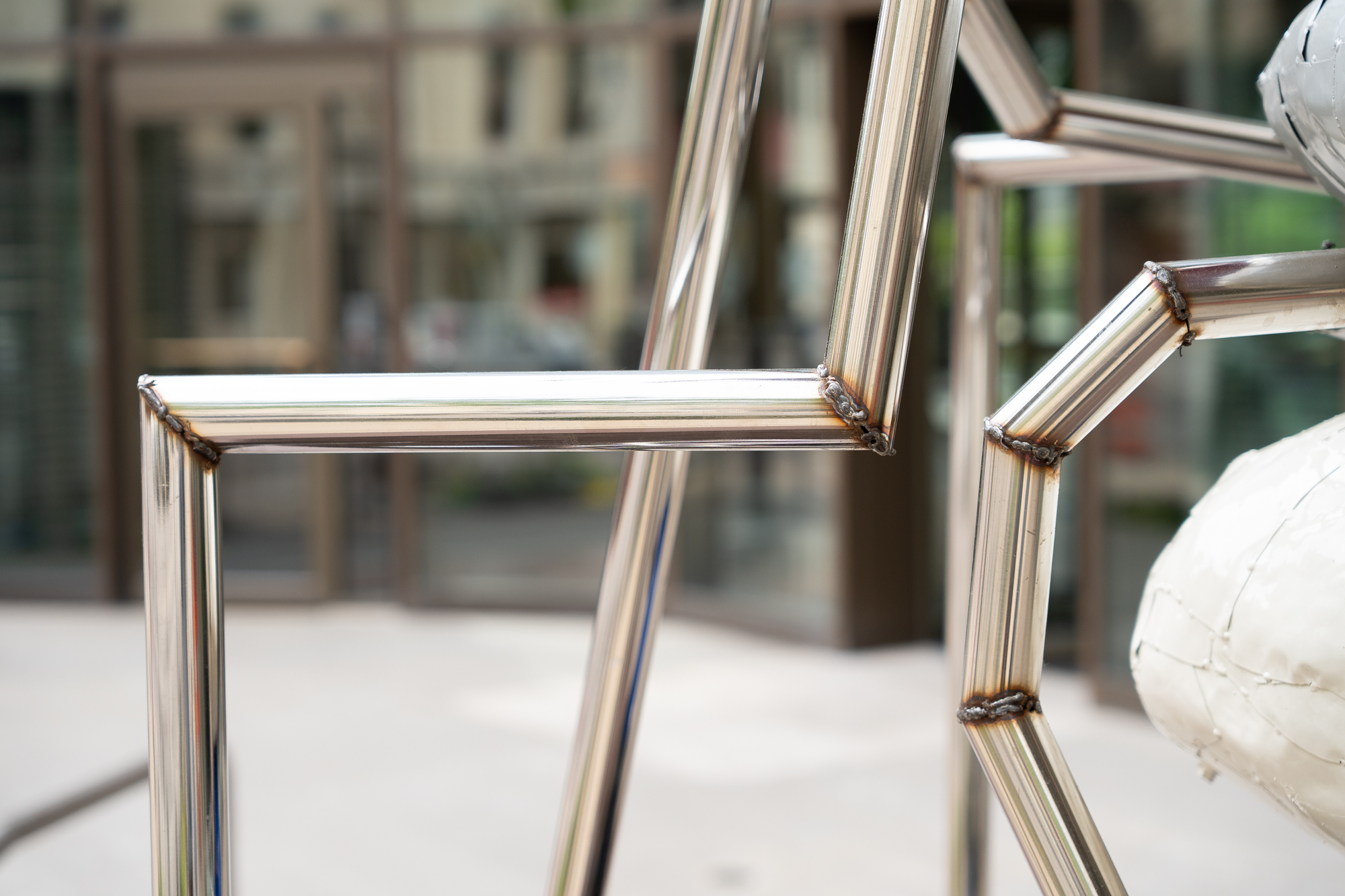
An architectural layer extends this logic into the surrounding environment. Construction-like elements frame the work, evoking a space that is perpetually in process, where perception is not only supported but also directed, welded, and contained. From these structures, chain-like extensions unfold, suggesting both connection and restraint, and pointing to the subtle systems through which information circulates, narrows, and solidifies into shared realities.
In this work Ģelzis continues his exploration of translating abstract notions of data into physical form, while deliberately refusing any direct or literal representation. Here, data emerges from subjective experience, memory, sensation, and the conditions of a given environment, and is transformed through processes of cutting, welding, bending, and assembling into a cohesive yet unstable visual language.
Within the context of public space, the work remains open and contingent, entering into constant interaction with its surroundings and those who encounter it. The viewer is not positioned outside the work but becomes implicated within it, another point of perception within an expanding field of vision. Each gaze remains singular, yet participates in a shared structure where tension gradually accumulates and circulates.
Gaze Grows Bones approaches vision as a material in its own right, something that gathers over time, solidifies under pressure, and ultimately takes on structural form. What we see, how we are guided to see, and the conditions that shape this process slowly coalesce into internal frameworks that define both our perception of the world and our place within it.
Zane Onckule